
Now Reading: An Artist's Eye and the Art of Living
-
01
An Artist's Eye and the Art of Living

Advertising
Explore the world of sustainable fashion—from eco-friendly materials to innovative designs—and make a difference with your wardrobe.

Perception determines and shapes your thinking.
Is it true that there is such a thing as the artist’s eye? Does a creator see things differently? We would all say that we see with our eyes, but it is more accurate to say that it is the brain that sees. Most of the visual process takes place in the brain; the eyes are merely light receptors and form part of the first phase of the visual perception process. The information then passes to the association cortex and spreads to other parts of the brain. In many cases, it will reach the limbic system, which will imbue it with emotional significance.
Perception determines and shapes your thinking. In other words, the brain determines what it sees, what it takes in, and, above all, what it retains or accepts.
Today, for the most part, the inhabitant of a civilized, urbanized city is a servant of the system and of machines, because he constantly has to deal with his car, his cell phone, his computer—this, that, and the other thing. He spends his day feeding things and maintaining things, when he could simply live better—and this is because he does not know the purpose of life. What are the purposes of life? Why do we live? The art of living, not the art of doing things. You can live without doing many things, and you can do many things without knowing how to live. Most people on the street know how to do many things; they’re on the go all day, but that doesn’t mean they know how to live.
We live to fulfill ourselves, to give everything we possibly can from each of us, because that way we will have everything we can receive. But for this to begin, we need freedom. And to have freedom—not freedom of expression—what we must have is freedom of thought, because if you don’t have freedom of thought, it doesn’t matter what you say or how you speak.
Beauty cannot be understood; it is either perceived or not. Why do I like what I like? I don’t know! And I’ll rarely have to justify it with arguments… after all, it’s a matter of my personal taste. The real challenge lies in explaining this beauty to other people. As an artist and entrepreneur in the fashion industry and an art lover, in a sense I make a living by revealing beauty, but the rest of the people who have the opportunity to work alongside me accept as a matter of principle that business and art are beautiful, so I don’t have to convince anyone of anything. They arrive already convinced. Children, on the other hand, are fierce and demand irrefutable proof.
Credit: Wikimedia Commons
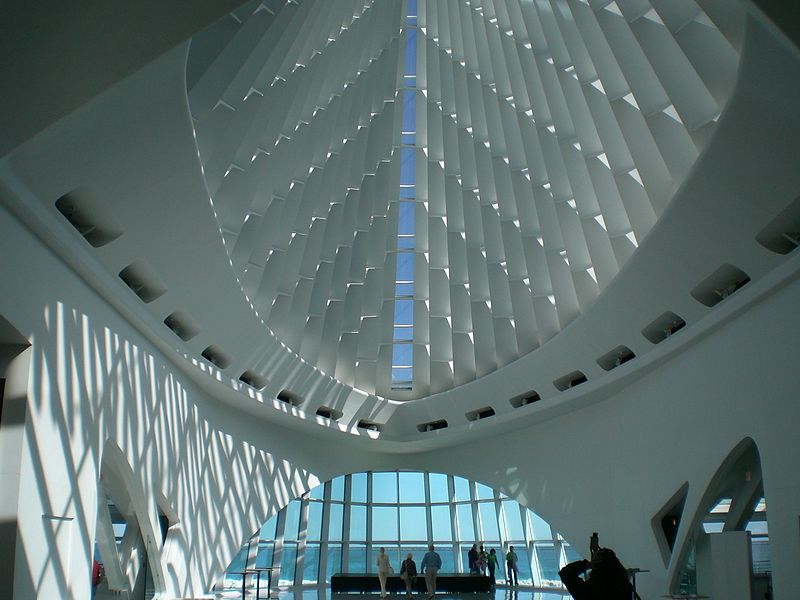
I remember the expression on the face of a boy between the ages of eight and ten at one of the exhibitions at the Milwaukee Art Museum… He naturally laughed at the scene, and I asked him, “What’s so funny?” To which he replied, “He’s naked, and everyone’s looking at him.” “Alea iacta est” (the die is cast)… there’s no turning back; it’s time to talk about the social acceptance of artistic nudity and its censorship in real life. Even though the gallery is filled with sculptures of naked men and women, if we were to take off our shirts, a security guard would immediately come over to reprimand us for the offense.
There is an anecdote related to this. First lesson: artistic morality stands in opposition to social morality, and for this reason, true works of art often have a subversive nature. Second lesson: the allegorical significance of nudity in ancient art allows us to associate the beauty of the body with other timeless virtues such as goodness, purity, and honesty; in other words, what is depicted is not what the artist intends to convey. The artist was thinking of the triumphalism of a Florence that had overcome corruption and abuse, but he could only think to represent it through the anatomical excellence of this muscular, naked young man.
“And why are they staring at her?” the boy presses me. “Well… because she’s beautiful,” I reply, at a loss. She’s beautiful because she’s imperfect, like the Leaning Tower of Pisa, which, if it hadn’t started to lean during its construction, probably no one would visit. Many of the works that today are undeniable examples of beauty owe their status in part to that imperfection, which, paradoxically, becomes exemplary.
Those in power make sure we don't have freedom of thought; that's why they educate us from childhood—so that we think what they want us to think. When they succeed, they limit our freedom of thought, which is really the key to finding the true meaning of life—a meaning that isn't limited to making money for expenses and entertainment; that's not what it's about. It's about finding personal fulfillment and being true and authentic to who we are.
Advertising





Advertising