
Now Reading: Appreciation of craftsmanship: indigenous crafts in Panamanian fashion
-
01
Appreciation of craftsmanship: indigenous crafts in Panamanian fashion

Advertising

From energy-efficient appliances to eco-friendly materials, learn how to make your home greener and more sustainable.
We share with you this reflection from Andrés Corella, Panamanian content creator and passionate fashion communicator, who began this month by meditating on the artisanal appreciation of indigenous craftsmanship in Panamanian fashion.
Opinion by Andrés Corella
Collaboration with:The Black Label Blogby Andrés Corella
Is it just me, or does it feel like this year has flown by? I've decided to write a little appreciation piece, highlighting the creative applications in which our local designers have captured all the beauty of our different indigenous cultures without resorting to the obvious, although with some elements it's a little difficult—you'll see what I mean.
Of course, there is one topic that cannot be avoided, and that is thecultural appropriationof indigenous crafts. For me, it's a bit complex because Panamanian identity is incredibly multicultural; it's something that is part of who we are on a genetic level. And while it's true that each cultural group has a specific segment of people, they are all very open to others and appreciate each other.
As for compensation for the use of these motifs, it should be noted that Panama does not have a fashion industry and designers operate on what could be described as an almost personal scale. Many employ indigenous workers as dressmakers or to perform specific tasks, and recognizing them and giving them their rightful place is the best way to reward these artisans.
Panamanian designers renowned for their use of mola
The selections I made are those that, in my opinion, somehow found a way to adapt a silhouette, treat a fabric, or manipulate technique in interesting ways.
The truth is that, as beautiful as the work of our indigenous people may be, in terms of fashion design, I have never considered simply copying and pasting something onto a skirt or blouse to be particularly remarkable. So, this post is for those designers who decided to take their appreciation of our indigenous culture a step further.
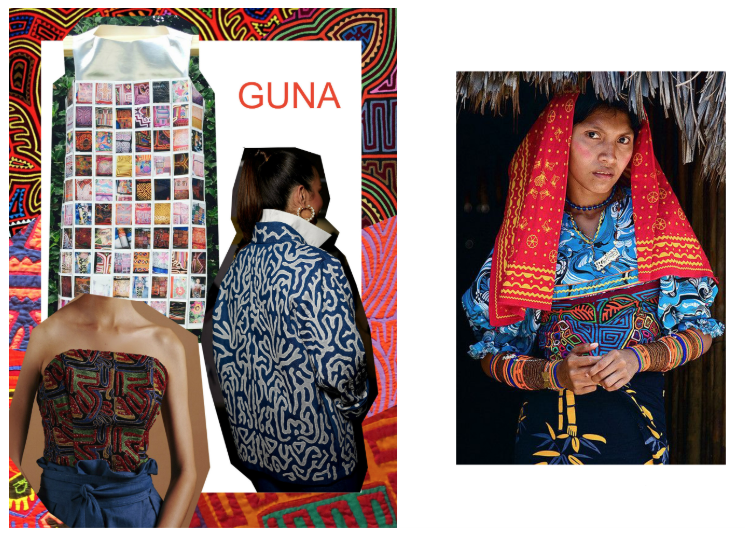
I believe I am correct in saying that Guna culture, especially their work with molas, is the most popular and sought-after form of indigenous craftsmanship. It is no wonder, as molas are beautiful and fascinating, and the colors and meticulous sewing work involved are truly admirable.
In this regard, I would like to highlight the work of designer Verónica Ángel, who dedicated her first collection to this beautiful culture. Although there were many excellent designs, her photo outfit has been one of her most memorable; using the mola without actually using it to create a mosaic of this beautiful art was a stroke of genius.
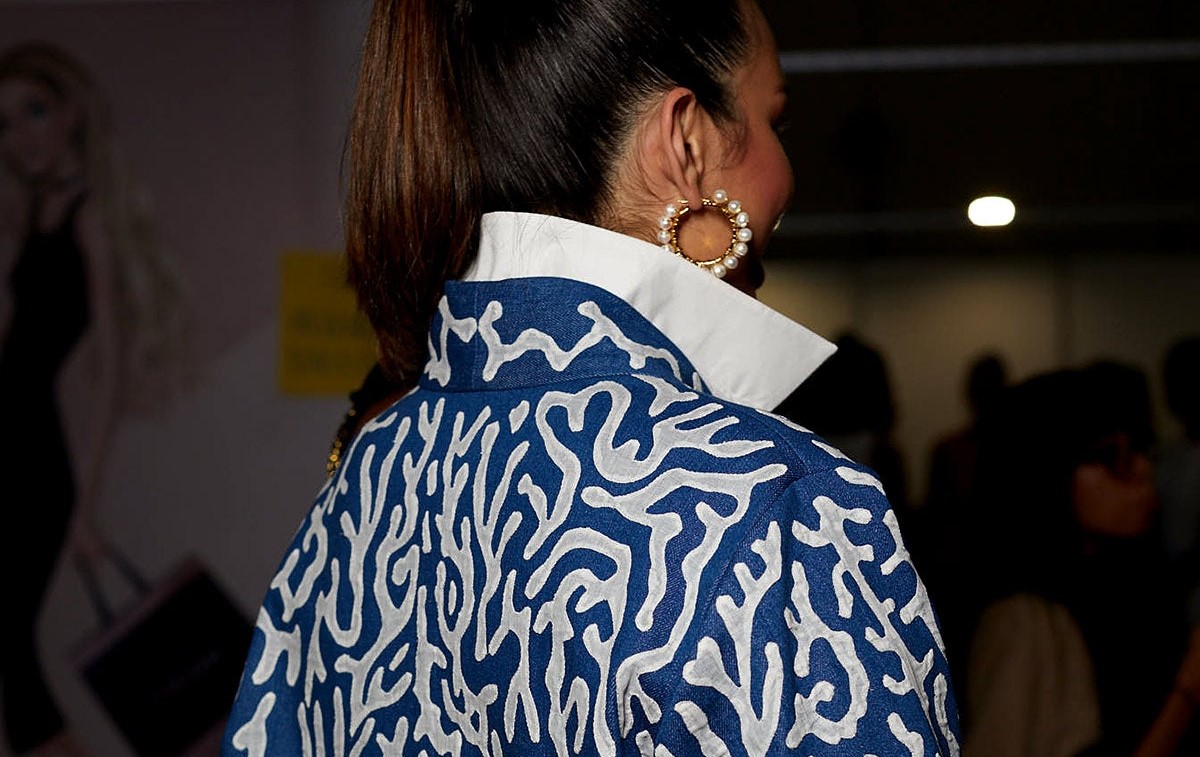
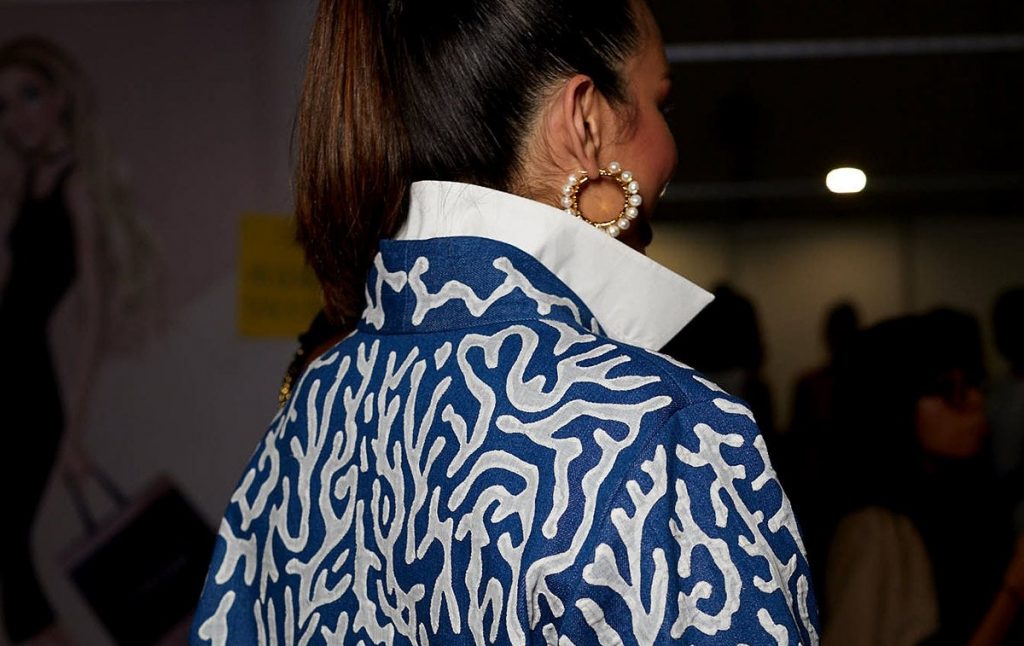
On the other hand, designer Hélène Breebaart, whose seamstresses are Guna women, uses the technique employed in mola and takes it to a high fashion level that has informed the aesthetic of her brand for years. The denim jacket with mola technique appliqués simulating corals for her 2017 collection will always be one of my favorites.
Meanwhile, the Marciscano brand found a way to reference the work of the Guna community in its Mestiza collection with beautiful embroidered textiles inspired by molas, without simply copying them.
Advertising






Advertising